Franchise Strategies
Dec 10, 2025
Dutch Bros stopped external franchising, reserving ownership for long‑tenured employees; investors can only buy stock (ticker BROS).
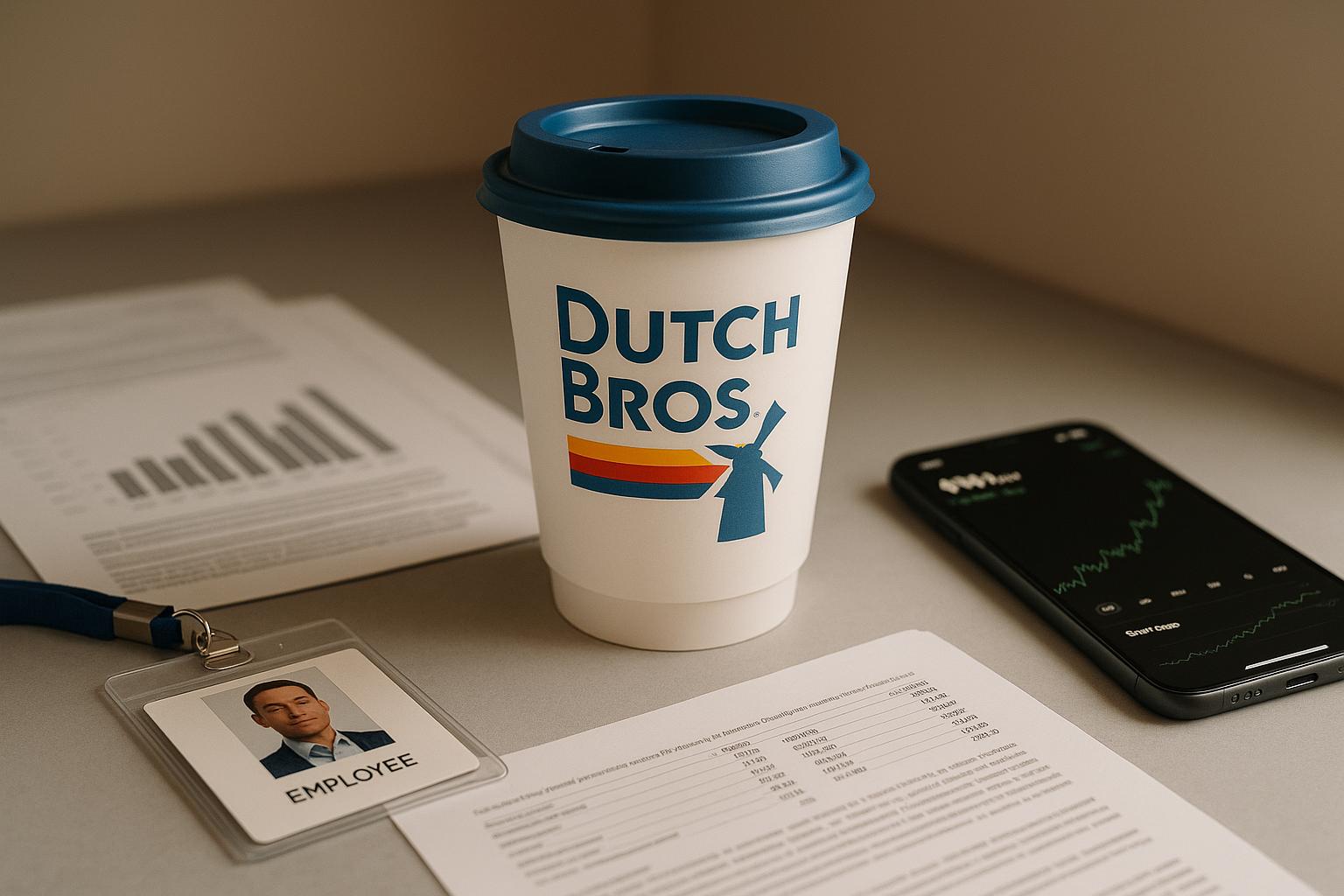
Dutch Bros Coffee doesn’t offer franchise opportunities to external investors anymore. Since 2017, the company has focused on a closed ownership model, allowing only internal employees with at least three years of tenure and strong alignment with company values to operate locations. This shift ensures consistency and protects its brand standards. Investors looking to get involved can only purchase Dutch Bros stock, as the company went public in 2021 under the ticker BROS.
In contrast, major coffee chains like Dunkin' Donuts, Tim Hortons, and Scooter's Coffee still welcome external franchisees, requiring significant upfront investments ranging from $228,000 to $1.9 million, plus ongoing royalty fees. These franchises offer faster entry into ownership but demand higher financial commitments.
If you're considering coffee franchise opportunities, Dutch Bros prioritizes internal growth, while other brands provide more accessible ownership paths for external entrepreneurs. Here’s a breakdown:
Dutch Bros (Internal Model) | Dunkin', Tim Hortons, Scooter's (External Franchises) |
|---|---|
Limited to employees only | Open to external investors |
No franchise fees | Franchise fees: $35,000–$90,000 |
Earnings: $65,000–$90,000 annually for operators | Higher earning potential for franchisees |
No direct ownership opportunities | Build equity through single or multi-unit ownership |
Choose the model that aligns with your financial goals and career vision.
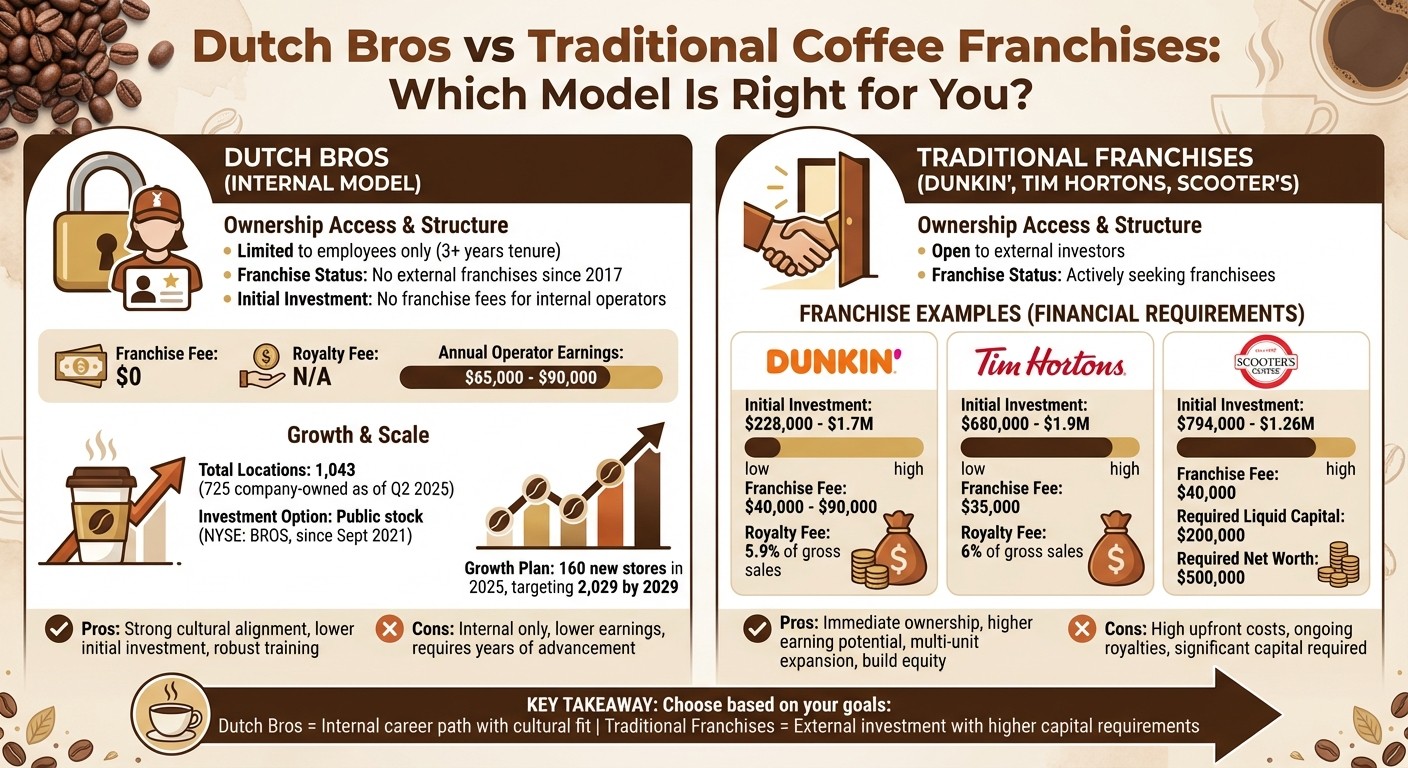
Dutch Bros vs Traditional Coffee Franchises: Investment Comparison Chart
1. Dutch Bros Coffee Ownership Model
Ownership Accessibility
Dutch Bros has moved away from external franchise opportunities as part of its evolving business model. While the company began offering franchises in 1999, it revised the model in 2008, requiring potential franchisees to have three years of company experience. By 2017, Dutch Bros completely stopped offering new franchises, meaning ownership is now limited to those promoted from within the company .
Investment Requirements
This shift has changed how investments in Dutch Bros work. Traditional franchise opportunities are no longer available. As of the second quarter of 2025, Dutch Bros operates 725 company-owned locations out of a total of 1,043, with the rest being legacy franchises established before 2017. For those interested in investing in the brand, the only option is to purchase company stock. Dutch Bros went public on the New York Stock Exchange under the ticker symbol BROS on September 15, 2021, raising $484 million. Despite going public, co-founder Travis Boersma retained about 74% of the voting power through Class B shares .
Operational Control
Dutch Bros' revised ownership model allows the company to maintain strong operational control across its stores. Between 2010 and 2015, its internal franchising approach achieved an impressive 97% continuity rate, with only 3% of franchise locations closing during that time. This success highlights the company’s commitment to selecting operators who align with its values and culture, ensuring a consistent customer experience. By the third quarter of 2025, company-operated locations accounted for 92.7% of total revenue, with franchising and other sources contributing just 7.3%.
Growth Opportunities
Staying true to its focus on operational control, Dutch Bros is expanding exclusively through company-owned locations. The company plans to open 160 new shops in 2025, aiming to reach 2,029 locations by 2029. This expansion is largely self-funded, thanks to profits generated after achieving free-cash-flow positivity. For those aspiring to own a piece of Dutch Bros, the current strategy means there are no opportunities to directly buy into the company’s operations. Instead, growth is driven internally, ensuring the brand maintains its standards and culture.
2. Traditional Coffee Franchise Model
Ownership Accessibility
Traditional coffee franchises open the door to external investors who meet specific financial and experience benchmarks. Unlike Dutch Bros' internal ownership model, these franchises offer a more inclusive approach to ownership. Brands like Dunkin' Donuts, Tim Hortons, and Scooter's Coffee actively seek individuals interested in single-unit or multi-unit operations. To qualify, potential franchisees need a mix of business savvy, entrepreneurial spirit, and a strong focus on customer service. Let’s take a closer look at the financial commitment involved in these opportunities.
Investment Requirements
Getting started with a traditional coffee franchise comes with a hefty initial investment. This covers everything from construction and equipment to signage, inventory, and working capital. Here’s a breakdown of what some major franchises require:
Dunkin' Donuts: Initial investments range from $228,000 to $1.7 million. Franchise fees fall between $40,000 and $90,000, with a royalty fee of 5.9% on gross sales.
Tim Hortons: Startup costs range from $680,000 to $1.9 million, plus a $35,000 franchise fee and a 6% royalty fee.
Scooter's Coffee: Requires an investment between $794,000 and $1,264,500, with $200,000 in liquid capital and a net worth of $500,000.
For a detailed cost breakdown, it’s crucial to examine the Franchise Disclosure Document (FDD), particularly Items 5, 6, and 7.
Coffee Franchise | Initial Investment Range | Franchise Fee | Royalty Fee |
|---|---|---|---|
Dunkin' Donuts | $228,000 – $1.7 million | $40,000 – $90,000 | 5.9% of gross sales |
Tim Hortons | $680,000 – $1.9 million | $35,000 | 6% of gross sales |
Scooter's Coffee | $794,000 – $1,264,500 | $40,000 | Varies |
Once the financial requirements are met, franchisees gain the autonomy to manage their operations.
Operational Control
In contrast to Dutch Bros' centralized management structure, traditional franchisees handle the day-to-day operations themselves. This includes hiring and training staff, creating work schedules, and implementing local marketing strategies. While franchisees must adhere to the brand's overall guidelines, they have the flexibility to adapt to local needs and preferences. To succeed, prospective franchisees should connect with current operators to learn about staffing practices, wage expectations, drive-thru efficiency, and utility costs in their area.
Growth Opportunities
The U.S. coffee market continues to thrive, offering plenty of room for revenue growth. Many franchisees start with a single location and, once successful, expand into multi-unit operations. These agreements allow operators to establish a stronger regional presence and grow their business portfolio over time.
Dutch Bros Franchise Is Exclusive On Purpose
Pros and Cons
Dutch Bros takes a unique approach with its internal ownership model, focusing on cultural alignment and career growth for its employees. On the other hand, traditional franchise models offer immediate ownership opportunities and the potential for higher earnings. These contrasting strategies highlight the financial and operational trade-offs between the two systems.
With Dutch Bros' internal model, employees have a clear path to grow within the company. This structure ensures that regional operators are deeply aligned with the company’s values and standards. CEO Travis Boersma has emphasized the importance of maintaining strict cultural standards. However, the financial rewards for regional operators range from $65,000 to $90,000 annually, which is notably lower than what franchise owners typically earn.
Traditional coffee franchises, by comparison, allow entrepreneurs to step into ownership right away. Franchisees can purchase a location, build equity, and even expand into multiple locations, often with the potential for greater financial returns. But these benefits come with challenges - substantial upfront costs, ongoing royalty payments, and the need for significant liquid capital.
Internal Model (Dutch Bros) | Traditional Coffee Franchises |
|---|---|
Pros: Strong cultural alignment, lower initial investment for operators, clear career growth, robust training and support | Pros: Immediate ownership, higher earning potential, opportunities for multi-unit expansion, ability to build business equity |
Cons: Limited to internal employees, lower operator earnings ($65,000–$90,000), requires years of internal advancement, leadership roles must be earned | Cons: High upfront costs, ongoing royalty fees, significant liquid capital required, cultural consistency may vary |
Dutch Bros prioritizes preserving its culture and developing leaders from within, while traditional franchises focus on opening ownership opportunities and building equity quickly. Neither model is universally better - it all depends on the goals and priorities of the entrepreneur.
Conclusion
Dutch Bros has chosen to stick with an internal, company-owned model, prioritizing its culture and ensuring a consistent experience for customers. By moving away from external franchise opportunities, the company now focuses on promoting long-term employees into leadership roles.
For investors, this approach creates a clear distinction. If you're looking to invest in a coffee franchise, Dutch Bros won’t be an option. However, the expanding coffee market still provides plenty of opportunities through traditional franchise models - where qualified external investors can secure ownership. Be sure to review the latest Franchise Disclosure Documents to get the full picture before making any decisions.
At the end of the day, different business models appeal to different types of investors. Dutch Bros emphasizes cultural consistency and operational control, whereas traditional coffee franchises offer a quicker entry point for external investors with the right resources. If you're considering investing, focus on brands that align with your financial goals and business vision.
FAQs
Why doesn’t Dutch Bros allow external franchises anymore?
Dutch Bros made a pivotal decision in 2017 to stop offering external franchise opportunities. This move was aimed at preserving the company’s distinct culture and ensuring consistent quality across all its locations. Rather than bringing in outside investors, Dutch Bros chose to focus on its own team, creating pathways for employees to grow into leadership roles and eventually run their own locations.
By emphasizing internal promotions, Dutch Bros has stayed aligned with its core values, maintained high standards, and cultivated a close-knit community among its employees. This strategy has helped build a dedicated group of operators who deeply understand and embody the brand’s mission and vision.
Why does Dutch Bros use a unique ownership model?
Dutch Bros uses a distinctive ownership model that plays a key role in preserving its core values. By focusing on internal development and carefully choosing operators who share their culture and mission, the company ensures that every location delivers a consistent, top-notch experience for customers.
This strategy creates a deep sense of connection and loyalty - not just among employees, but also with customers. It’s a big reason why Dutch Bros stands out in the crowded coffee industry.
Can I invest in Dutch Bros, and what are my options?
Dutch Bros isn’t open to traditional franchise opportunities at the moment. If you’re looking to invest, your best bet is to buy company shares, which are usually priced at around $30 per share. Alternatively, you could consider joining their team and growing your career through their internal advancement programs.
