Franchise Strategies
Mar 2, 2026
How franchisors balance consistent branding with local adaptations using templates, analytics, co-op funds, approval workflows and performance metrics.
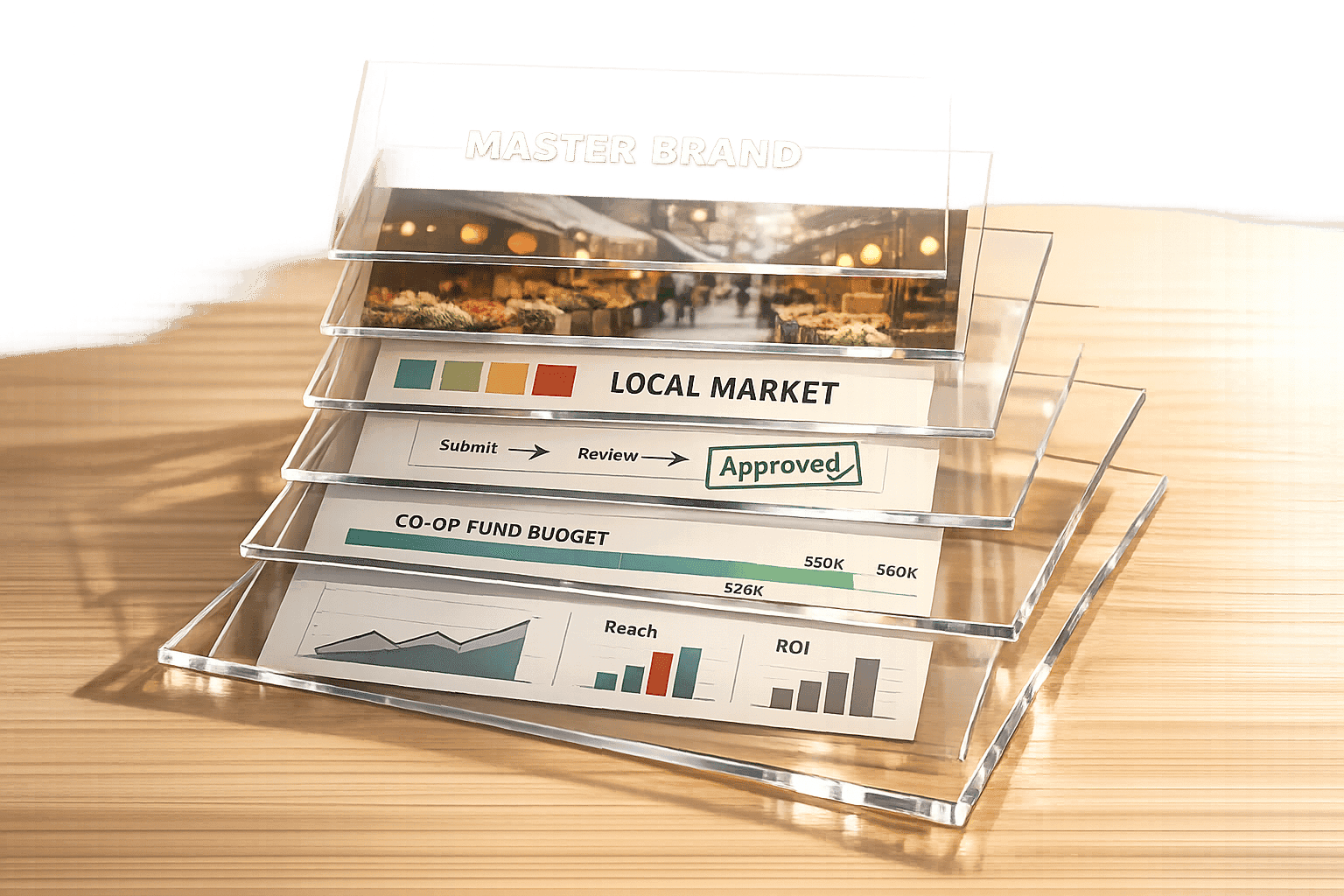
Franchisors must strike a balance between consistency and local relevance. Regional brand customization allows franchises to cater to local tastes, preferences, and cultural norms while maintaining the brand's core identity. This approach boosts customer loyalty and sales, with tailored efforts increasing loyalty by up to 70% and sales by 30%. However, consistency across locations remains critical, as it can enhance revenue by over 20%.
Key Highlights:
Why It Matters: Localized strategies resonate with customers, driving loyalty and sales. For instance, McDonald’s India introduced the McAloo Tikki, increasing local sales by 10%.
Franchisor's Role: Provide tools like customizable marketing templates, data analytics, and financial support to help franchisees adapt to local markets without compromising the brand.
Challenges: Franchises risk off-brand content (77% struggle here) or customer backlash (50% boycott due to mishandled local incidents).
Tools & Strategies: Franchisors offer approval workflows, centralized reporting, and performance tracking to ensure local adaptations align with brand standards.
Success Metrics: Evaluate through sales growth, customer satisfaction, and compliance with branding guidelines.
Bottom line: Regional brand customization, when guided by franchisors through structured tools and oversight, strengthens both local appeal and brand consistency, driving long-term success.
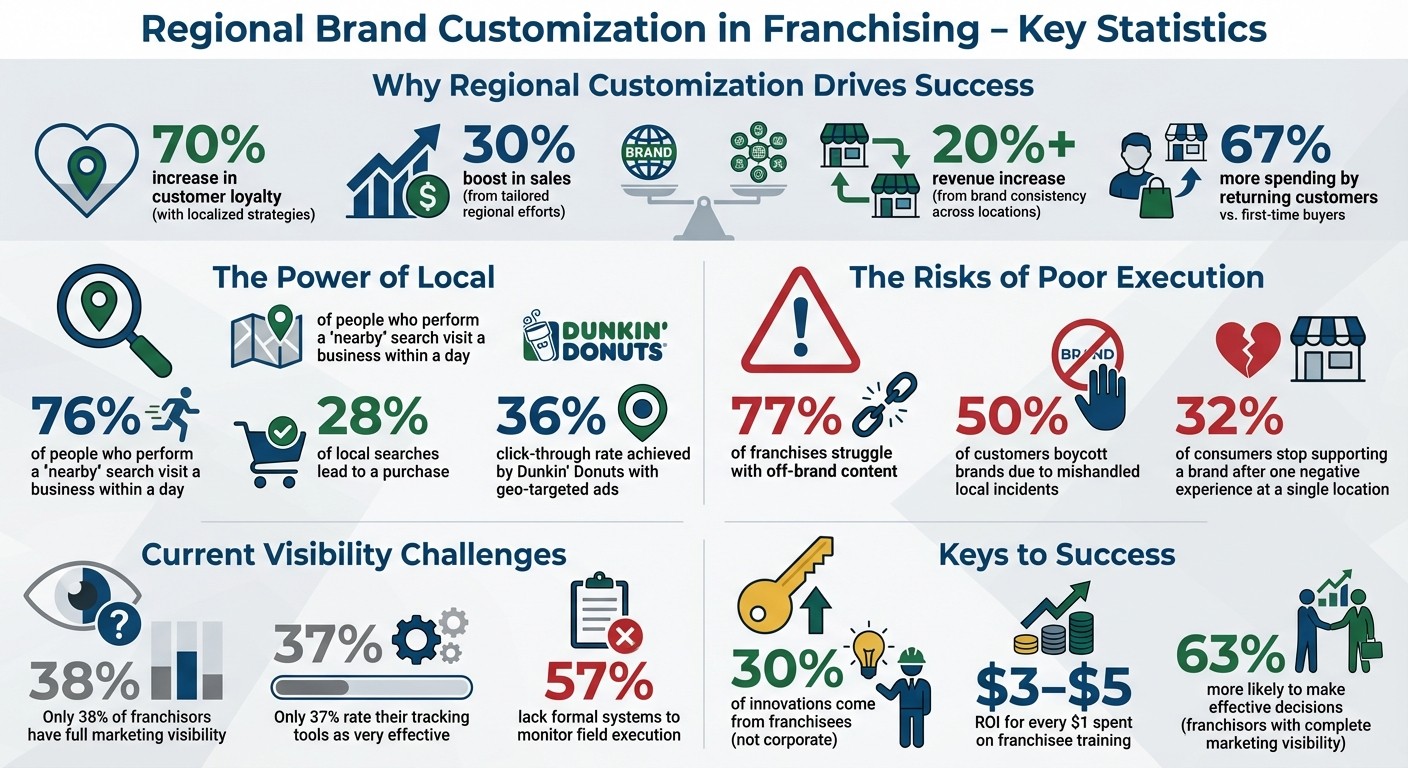
Regional Brand Customization Impact: Key Statistics for Franchise Success
Marketing Your Business With Right at Home | Dawn Drazdys
Why Regional Customization Matters in Franchising
Regional customization isn’t just a perk - it’s a must-have for franchises looking to thrive. Today’s consumers aren’t drawn to cookie-cutter messaging; they’re looking for brands that speak to their local preferences and values. When a franchise takes the time to adapt to these nuances, it shows customers that they’re understood, which builds loyalty and keeps them coming back. And loyal customers aren’t just nice to have - they’re incredibly valuable. On average, returning customers spend 67% more than first-time buyers.
The stats back this up. Seventy-six percent of people who perform a “nearby” search on their smartphone visit a related business within a day, and 28% of those searches lead to a purchase. For franchises, this means tailoring efforts to local markets isn’t just about good PR - it’s about capturing immediate sales. Dunkin’ Donuts nailed this concept by using geo-targeted mobile ads to drive traffic to specific locations, resulting in an impressive 36% click-through rate.
"The days of one-size-fits-all national marketing campaigns are over. To truly succeed, franchises must embrace localized strategies that resonate with the communities they serve." - Ronn Torossian, Founder and Chairman, 5W Public Relations
But it’s not just about boosting sales. Regional customization helps franchises become part of the community. Franchisees can tap into local insights - like customer habits or seasonal trends - to shape their offerings. For instance, a fast-food franchise in New York City might focus on quick, grab-and-go meals for busy commuters, while the same brand in a small town could emphasize family dining and local traditions. This community-focused approach turns franchisees into trusted local partners, not just another corporate chain. And this shift often means adjusting key aspects of the brand.
Adjusting Core Brand Elements for Local Markets
Franchisors play a pivotal role in guiding franchisees on how to tweak their offerings while keeping the brand’s identity intact. This often includes tailoring messaging, promotions, and visuals to align with local tastes - without straying from the brand’s overall standards. Flexible marketing tools, like customizable ad and social media templates, let franchisees localize content while staying on-brand.
Product offerings are frequently the most visible area of adjustment. Smart, research-driven changes can make all the difference. Franchisors typically have structured approval processes, allowing franchisees to suggest local modifications while ensuring final decisions align with the brand’s core values.
Local engagement is another key strategy. Franchisees can sponsor community events, partner with local businesses, or even support local sports teams to deepen their ties to the area [17, 19]. These efforts create a sense of authenticity that broad, national campaigns just can’t replicate. By giving franchisees the tools and freedom to adapt, while maintaining clear guidelines, franchisors help them connect with their communities without losing sight of the bigger brand picture.
Maintaining Consistency Across the Franchise Network
Even as franchises embrace customization, consistency remains critical. The challenge is finding the sweet spot between allowing local flexibility and maintaining a unified brand image. A consistent presentation across platforms can boost revenue by over 20%. Customers expect certain elements - like logos, colors, and service quality - to remain the same no matter the location.
Franchisors address this by setting clear brand guidelines that outline non-negotiable elements, such as logo usage, color schemes, and messaging standards. These guardrails ensure that while franchisees can adapt to local needs, the brand’s core identity remains intact. For example, a franchisee might promote a local event but still use the brand’s signature look and feel.
To ensure this balance, franchisors provide ongoing support through audits, performance tracking, and feedback systems. This oversight helps franchisees make local adaptations that enhance the brand rather than dilute it. When done well, this approach creates a brand that’s both nationally recognizable and locally relevant.
Franchisor Tools and Resources for Regional Customization
Franchisors looking to help franchisees thrive in local markets need to provide practical tools that allow for regional adaptation while maintaining the brand's identity. These tools often include customizable marketing assets, data-driven insights, and financial support - each playing a key role in balancing local customization with brand consistency.
Customizable Marketing Templates and Ad Libraries
Pre-designed marketing materials are a cornerstone of regional customization. Many franchisors offer templates for brochures, flyers, signage, and promotional materials. These templates can be tailored with local contact details, special promotions, or community-focused messaging, all while adhering to strict brand guidelines for logos, layouts, and color schemes.
To make these resources easily accessible, franchisors often provide centralized online portals where franchisees can download materials, training manuals, and operational guides at any time. This system ensures quick adaptation to local needs without compromising the brand's overall look and feel. Regular audits and inspections further ensure that localized materials align with the core brand identity. These marketing resources set the stage for leveraging another powerful tool: data insights.
Data Analytics for Regional Insights
Sharing data like sales figures, performance metrics, and consumer trends equips franchisees to make smarter, evidence-based decisions. For instance, sales data might reveal that demand for cold beverages spikes during specific months, prompting franchisees to adjust promotions or inventory accordingly. Predictive analytics can also identify high-potential markets by analyzing factors such as demographics, income levels, and spending habits.
Modern platforms take it a step further by creating detailed customer profiles based on purchase history and lifestyle data, enabling franchisees to run highly targeted local campaigns. A great example of this is Cavender's Western Wear, which used data insights in 2025 to open 27 new locations - tripling its usual expansion rate. Similarly, TNT Fireworks improved its site selection process tenfold by leveraging these tools.
Chris Conner, President of FMS Franchise, highlighted the importance of this data-driven approach:
"Franchising works best when it's guided by evidence, not emotion. Predictive analytics gives our clients the confidence to scale at the right pace, in the right places, with the right partners."
However, not all franchisors are fully utilizing these tools. While franchisors with complete marketing visibility are 63% more likely to make effective decisions, only 38% achieve this level of insight today. Financial support plays a crucial role in helping franchisees act on these insights.
Co-op Advertising Funds and Financial Support
Even the best marketing strategies need financial backing to succeed. Co-op advertising funds - pooled contributions from franchisees - are commonly used to support both national and local campaigns. Transparent reporting ensures franchisees can see how their contributions benefit their specific markets.
Beyond advertising, franchisors often provide financing for essential updates, such as facility renovations or equipment upgrades, ensuring locations can meet regional standards. During economic downturns or market challenges, some franchisors even offer temporary relief from franchise fees, helping franchisees stay afloat. As FMS Franchise explained:
"Financial support, such as temporary relief from franchise fees during economic downturns, along with guidance on cost management and efficiency improvements, can also play a crucial role in helping franchisees weather challenging times."
Preferred vendor networks are another way franchisors support franchisees, offering access to discounted procurement options and supplier rebates, which help reduce operating costs. These financial tools, combined with marketing and data insights, create a framework that allows franchisees to adapt locally without losing sight of the brand's overall identity.
Franchisor Strategies for Guiding Franchisee Implementation
Helping franchisees implement strategies effectively requires more than just providing tools and guidelines. Success depends on tailored training, well-defined approval processes, and ongoing performance evaluation. Franchisors must strike a balance between allowing local customizations and maintaining brand consistency. This involves a mix of education, oversight, and regular communication.
Providing Market Research and Training
Franchisors often supply franchisees with detailed market insights, including demographic and psychographic data, to help them understand local customer needs and purchasing power. Tools like SWOT analysis (Strengths, Weaknesses, Opportunities, Threats) assist in evaluating market conditions and identifying competitive advantages.
To further support franchisees, franchisors use AI-powered analytics and localized SEO tools to highlight local search behaviors. Franchise Advisory Councils also play a key role, allowing franchisees to share their regional insights with corporate teams to refine broader strategies. Training programs - delivered through regional centers or digital platforms - equip franchisees with the knowledge to interpret data and navigate regional legal requirements, such as labor laws and health standards.
Interestingly, 30% of system-wide innovations come from franchisees rather than corporate teams. Moreover, investing in training pays off: for every $1 spent on training, franchisors often see a $3 to $5 increase in royalties. These resources lay the groundwork for setting up streamlined, automated workflows for local marketing approval.
Setting Up Approval Workflows for Local Campaigns
To maintain brand integrity, franchisors deploy centralized tools like Digital Asset Management (DAM) platforms. These ensure franchisees have access to approved logos, messaging, and templates while preventing unauthorized changes. Tiered access within these systems allows specific roles or locations to customize materials appropriately.
Web-to-publish templates are another key tool, enabling franchisees to add local details without altering core brand elements. Automated compliance checks catch issues like outdated logos, incorrect color schemes, or unapproved language before campaigns launch. Tim Clarke, Brand Reputation Manager at Thrive Local, explains:
"Brand consistency ensures that customers have the same experience across all locations, which builds trust and strengthens brand recognition. For franchises, inconsistent branding can confuse customers and damage the reputation of the entire network."
Franchisors also implement formal submission protocols, requiring franchisees to share local marketing materials for review before they go live. This ensures campaigns align with brand standards while still catering to local markets. Once these processes are in place, franchisors can focus on monitoring and refining regional efforts.
Tracking Performance and Providing Feedback
After implementation, continuous tracking ensures that local strategies meet expectations. Centralized reporting tools and brand compliance software monitor marketing efforts in real time, flagging any deviations. Reputation management tools also help evaluate how individual locations handle customer feedback.
For example, in 2024, Choice Hotels International used its "Choice University" (ChoiceU) platform to track franchisee performance. The platform logged nearly 2 million completed courses, and data showed that hotels using the system achieved Likelihood to Recommend (LTR) scores 1.4 points higher than those that didn’t. Chief Development Officer David Pepper highlighted the value of feedback:
"We prioritize listening through advisory councils and direct feedback loops to ensure we're addressing franchisee needs in real time."
Similarly, in 2025, BWH Hotels (Best Western) leveraged its "BW Connect" platform and regional marketing co-ops to strengthen communication between corporate leadership and franchisees. Tanna Zywina, a Best Western franchisee, collaborated with BWH Hotels' CMO Joelle Park to provide input that influenced both global advertising and local renovations. Zywina remarked:
"When our headquarter office listens and implements feedback from frontline owners like myself, it builds respect and confidence. That mutual respect creates a real sense of partnership."
Regular brand audits, field visits, and mystery shopper programs ensure that regional initiatives align with brand standards. Despite these tools, 57% of franchisors still lack formal systems to monitor field execution and performance. By establishing standardized feedback loops and equipping Franchise Business Coaches (FBCs) with mobile-friendly tools, franchisors can provide timely, personalized support to franchisees.
Measuring Success of Regional Customizations
Evaluating the success of regional customizations requires a mix of financial and brand-focused metrics to determine whether these adaptations are driving growth.
Key Metrics for Assessing Regional Campaigns
To assess how well regional campaigns perform, look at metrics like same-store sales, profit margins, year-over-year growth, cost per lead (CPL), return on ad spend (ROAS), and cost per acquisition (CPA) by region. Research shows that localized menu changes can significantly boost sales, and well-executed localization strategies can improve customer loyalty by as much as 70%.
Customer sentiment is another critical indicator. Tools like Net Promoter Score (NPS), Customer Satisfaction (CSAT), and brand perception surveys can reveal how well regional messaging resonates with the audience. For instance, over 70% of Americans expect advertising to be tailored to their local context, and more than half are more inclined to buy from brands that prioritize localized advertising. Additionally, engagement metrics such as campaign participation rates, Google Business Profile rankings, and regional social media sentiment provide valuable insight into local audience response.
Balancing brand consistency with regional flexibility is essential. One way to maintain this balance is by implementing a "Guidelines Compliance Score", which could allocate weight to visual standards (30%), operational standards (40%), and marketing standards (30%). This ensures that regional customizations uphold the brand's core identity. Consistency matters - maintaining it across locations can increase revenue by 10-20%. On the flip side, 32% of consumers report they would stop supporting a brand they previously loved after just one negative experience at a single location. By blending localized performance metrics with centralized reporting, businesses can gain a comprehensive view of campaign effectiveness.
System-Wide Reporting and Analysis
While local metrics provide granular insights, centralized reporting offers a broader perspective. Franchisors can use centralized tools to track both network-wide and location-specific performance. However, only 38% of franchisors claim full visibility into their franchisees' marketing efforts, and just 37% rate their current tracking tools as very effective. To address this, standardize data collection across all locations by using consistent naming conventions, tracking URLs, and lead attribution rules. This approach ensures accurate, comparable data across regions.
Segmenting stores by factors such as geography, maturity, and traffic levels allows for more meaningful comparisons. Integrating CRM, Point of Sale, and advertising platforms can enable "Marketing-Attributed Revenue" reporting, directly linking local purchases to specific regional campaigns. Dan Forootan, President of StreamSend, highlights the importance of multi-level reporting:
"By segmenting your email marketing database into sub-accounts, one for each franchisee, you are able to pull multi-level reporting that shows the big picture across the entire franchise spectrum and also zooms in on individual locations."
System-wide analysis can help identify top-performing regions, making it easier to replicate successful strategies in similar markets. For example, Jiffy Lube allocated its national media budget across six U.S. regions, tailoring messaging to reflect the priorities of customers in each area rather than relying on a one-size-fits-all approach. Franchisors can use these insights to refine their regional strategies, guide franchisee execution, and maximize returns by scaling what works across the network.
Conclusion
Franchisors who provide clear guidelines, flexible tools, and continuous support create a foundation that strengthens their brand while allowing room for local adaptations. By defining "brand must-haves" and outlining areas for regional flexibility - like pricing, décor, or sourcing - franchisors help franchisees connect with their communities without diluting the brand's core identity. This approach shifts the focus from rigid rulebooks to adaptable frameworks, ensuring consistency without unnecessary rigidity.
The benefits ripple throughout the franchise network. Consistent branding can boost revenue by 10–20%, while localized efforts can increase customer loyalty by up to 70% and drive sales growth of up to 30%, especially when paired with AI-driven marketing insights. Tools like pre-approved marketing templates, advanced data analytics, and centralized reporting systems allow franchisees to focus on engaging their local markets instead of getting bogged down by administrative tasks.
Maintaining this balance also protects the brand's identity. Approval workflows and regular brand audits help franchisors catch "brand drift" early, preventing small issues from escalating. As Franchise Consultant Mariel Miller explains:
"A nimble support system does not weaken brand - it lifts results. Brands that marry national reliability with regional smarts will be the ones out in front tomorrow".
This balance between corporate oversight and local execution ensures that each franchise location feels like part of a trusted national brand while still resonating as a local favorite. It also lays the groundwork for innovation across the network.
Savvy franchisors see regional customization not as a risk but as an opportunity to innovate and grow. When successful local strategies are identified and shared across the network, the entire system benefits. This collaborative approach creates a competitive edge that fuels growth across all markets.
For more information on tailoring franchise strategies to regional needs, check out Franchise Ki for free consulting services.
FAQs
What parts of the brand can franchisees localize without approval?
Franchisees have some flexibility to tailor certain aspects, such as marketing channels, messaging, and even adjustments to align with local preferences. However, key brand elements - like signage, logos, and interior décor - typically need prior approval. This ensures the brand maintains a consistent identity across all locations.
How can a franchisor prevent off-brand local marketing?
Franchisors can maintain consistent branding across locations by offering franchisees corporate-approved marketing resources. These might include standardized templates, detailed brand guidelines, and user-friendly tools. While these resources help ensure a unified brand image, they still allow some flexibility for local customization to address regional preferences effectively.
What KPIs best demonstrate that local customization is effective?
Key performance indicators (KPIs) to watch are customer satisfaction (like Net Promoter Score), sales growth, local market share, and customer loyalty metrics. These metrics provide insight into how effectively regional strategies match local consumer needs and contribute to overall business success.
