Franchise Strategies
Dec 5, 2025
High startup costs, ongoing royalties, thin margins and operational headaches make Smoothie King and Tropical Smoothie risky franchise investments.
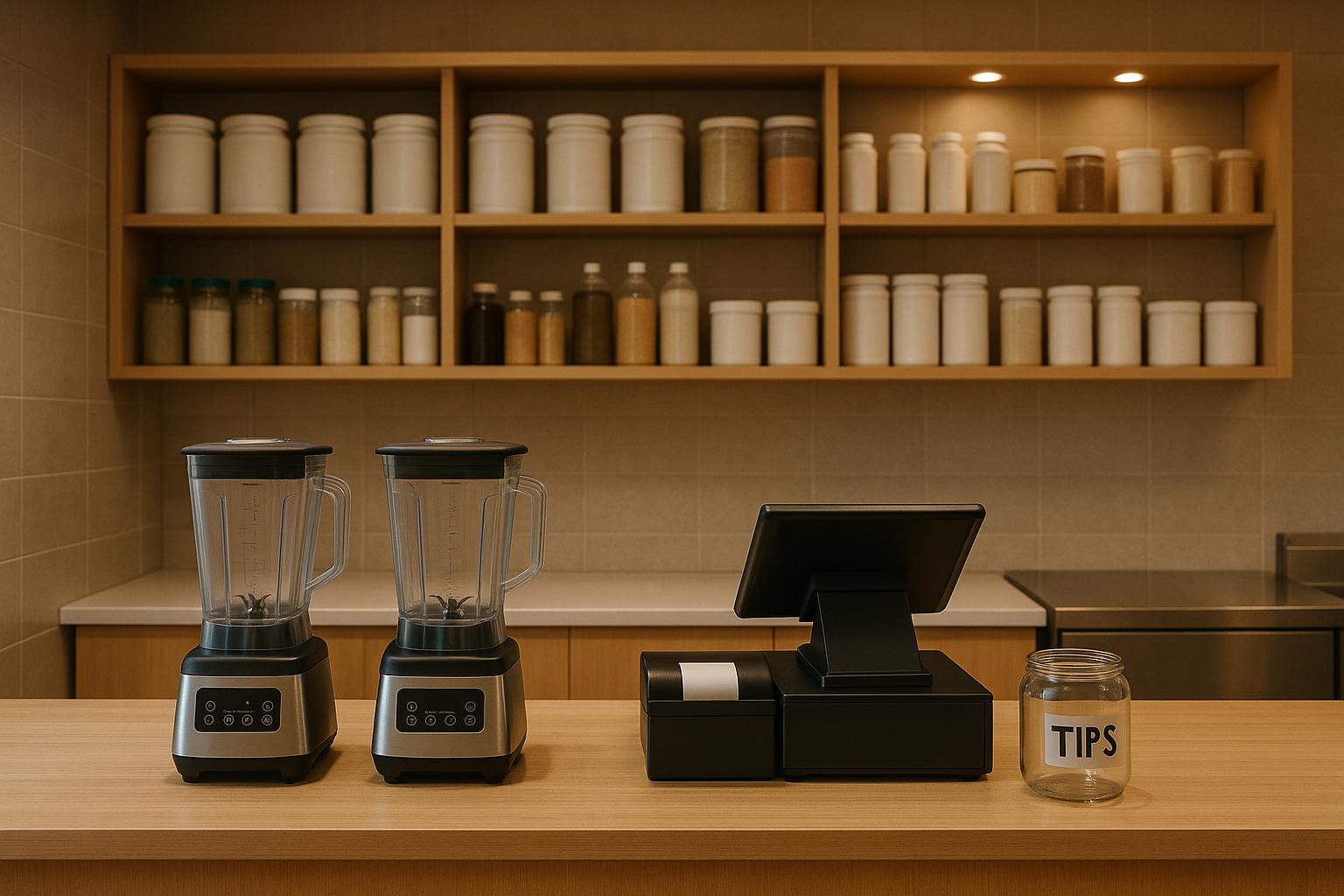
Smoothie King and Tropical Smoothie Cafe might seem like attractive franchise opportunities due to their alignment with the health-conscious trend. However, both come with financial and operational hurdles that make them risky investments. Here’s why:
High Initial Costs: Smoothie King’s startup costs range from $311,601 to $1,379,150, while Tropical Smoothie Cafe costs $296,500 to $661,500.
Ongoing Fees: Both brands charge 6% royalties and 3–4% marketing fees, cutting into already slim profit margins.
Low Profit Margins: Franchisees typically earn 12–15% margins, with annual earnings between $80,000–$143,212.
Operational Challenges: Managing perishable inventory, high staff turnover, and extensive hours adds significant stress.
Market Saturation: Competition from other franchises, independent juice bars, and grocery stores limits growth.
Quick Comparison
Metric | Smoothie King | Tropical Smoothie Cafe |
|---|---|---|
Initial Investment | $311,601–$1,379,150 | $296,500–$661,500 |
Royalty Fees | 6% of gross sales | 6% of gross sales |
Marketing Fees | 3–4% of sales | 3–4% of sales |
Average Sales | ~$660,000 (overall) | ~$1 million |
Profit Margins | ~12–15% | ~12–15% |
Payback Period | Several years | 5–7 years |
Both franchises demand high upfront investments, ongoing fees, and face stiff competition, making profitability challenging. If you’re considering a franchise, consulting experts can help identify better options with stronger returns.
🍹 SMOOTHIE KING vs. TROPICAL SMOOTHIE CAFE: Franchise Comparison & Insights ✨
Franchise Costs and Initial Investment Comparison
Starting a Smoothie King or Tropical Smoothie Cafe franchise is no small feat - it requires a hefty financial commitment, often ranging from several hundred thousand to over a million dollars. These high upfront and ongoing costs are a major factor that can influence the profitability of your investment. Let’s dive into the details of these expenses to give you a clearer picture.
Initial Franchise Fees and Build-Out Costs
Both Smoothie King and Tropical Smoothie Cafe charge an initial franchise fee of $30,000 for a traditional single-unit location. However, the total initial investment varies significantly between the two brands.
For Smoothie King, the estimated initial investment depends on the type of location. End-cap or in-line locations typically range from $311,601 to $638,465, while free-standing drive-thru locations can climb much higher, from $762,400 to $1,379,150. Build-out costs alone can add up to $33,750.
Key expenses for Smoothie King franchisees include:
Leasehold improvements: $135,000 to $280,000
Furniture, fixtures, equipment, millwork, and graphics: $80,000 to $140,000
Signage: $5,000 to $14,000
Architectural and engineering services: $3,500 to $14,500
Additional costs include technology systems ($9,100 to $12,215), grand opening marketing (minimum $15,000 for traditional units), rent and deposits for three months ($5,000 to $25,000), initial inventory and supplies ($23,000 to $24,000), and insurance premiums ($2,500 to $7,500). Smoothie King also advises franchisees to have $5,000 to $25,000 in reserve for the first three months of operations.
Tropical Smoothie Cafe, on the other hand, generally requires a lower total investment. The estimated initial costs range from $296,500 to $661,500, with most franchisees spending around $440,000 to $500,000. While detailed build-out costs aren’t as extensively outlined as Smoothie King’s, the lower overall investment suggests either reduced construction expenses or more adaptable store formats.
Tropical Smoothie Cafe’s grand opening marketing costs, between $7,500 and $10,000, are notably lower than Smoothie King’s minimum. However, when you’re already committing hundreds of thousands of dollars, this difference might not feel as significant. Keep in mind that location-specific factors - such as real estate prices, local construction rates, and landlord requirements - can push your costs toward the higher end of the spectrum, potentially limiting your working capital.
Ongoing Fees and Financial Commitments
Beyond the initial investment, franchisees must contend with ongoing fees that can significantly affect their bottom line. Both Smoothie King and Tropical Smoothie Cafe charge royalty fees based on gross sales, regardless of profitability.
Royalty Fees: Both brands require 6% of gross sales. Smoothie King also enforces a $500 monthly minimum, meaning you owe this amount even during low-sales periods.
Marketing Fees: Smoothie King charges 3% of weekly sales to the national advertising fund in areas with a regional marketing fund, or 3% to 4% in regions without one. Franchisees are also required to spend 2% of weekly sales on local marketing (or 1% if no regional fund exists). Tropical Smoothie Cafe’s marketing fees are similar, with a National Marketing Fee of 3% to 4% of gross sales and a Local Advertising Cooperative Contribution of at least 2%.
Technology Fees: Smoothie King requires an additional $200 monthly contribution for technology systems.
Altogether, these fees typically add up to 11% to 12% of gross sales, plus Smoothie King’s $200 monthly tech fee. For a franchise generating $500,000 in annual sales, that’s roughly $55,000 to $60,000 in fees - before you even account for rent, labor, ingredients, utilities, or other operating costs.
These ongoing financial obligations can be particularly challenging in the early months when sales are still ramping up. Since fees are tied to gross sales, you’ll owe them even during low-revenue periods. Combined with the steep upfront costs, this fee structure often favors the franchisor, leaving franchisees to shoulder a significant portion of every sale from the outset.
Profitability and Unit Economics Problems
As we’ve discussed, the significant upfront costs and fees are just the beginning of the financial challenges for franchise owners. The real test lies in turning that investment into lasting profitability. Both Smoothie King and Tropical Smoothie Cafe face hurdles when it comes to their unit economics, which directly impact revenue, profit margins, and the time it takes to recover the initial investment. Let’s break down the numbers.
Revenue, Margins, and Payback Periods
Tropical Smoothie Cafe reports an average net revenue of over $1 million, with a payback period ranging from 5 to 7 years. In contrast, Smoothie King generates average sales of $660,000, with a less defined return on investment timeline described only as "several years".
When it comes to profits, Tropical Smoothie Cafe franchisees see average annual gross sales of $954,743, with estimated owner earnings between $114,570 and $143,212. Smoothie King franchise owners, on the other hand, typically earn between $80,000 and $100,000 annually. While both brands show similar profit margins - around 12–15% - these figures highlight the challenge of achieving substantial earnings, even at higher revenue levels.
Here’s a side-by-side comparison of key metrics:
Metric | Smoothie King | Tropical Smoothie Cafe |
|---|---|---|
Average Annual Sales | ~$660,000 (overall) | ~$1 million |
Estimated Owner Earnings | $80,000–$100,000 | $114,570–$143,212 |
Typical Payback Period | "several years" | 5.0–7.0 years |
Profit Margin | ~12–15% (based on overall sales) | ~12–15% |
While Tropical Smoothie Cafe stands out with higher revenue and a clearer payback period, both brands face the same issue: modest profit margins. These slim margins, coupled with the high initial investment, make it challenging for franchisees to achieve strong returns. For many, the road to profitability remains steep and uncertain.
Operational Problems and Market Risks
Smoothie franchises like Smoothie King and Tropical Smoothie Cafe come with their own set of challenges beyond the financial hurdles already discussed. These operational and market-related issues can make running a franchise far more demanding than it initially appears, often catching new franchisees off guard. Together, these challenges can limit growth opportunities and increase risks for operators.
Daily Operations Requirements
Running a smoothie franchise involves managing several moving parts, many of which can strain both time and resources. One of the biggest challenges is inventory management. Smoothies rely on fresh ingredients with short shelf lives, and balancing inventory to meet demand without overstocking is tricky. Too much inventory leads to waste, while too little risks disappointing customers. This balancing act directly affects profit margins, which are already slim in this industry.
Staffing is another persistent headache. Smoothie shops need multiple employees per shift to handle tasks like taking orders, blending drinks, cleaning, and providing customer service. However, finding and keeping reliable staff at entry-level wages is tough. High turnover rates are common, forcing franchise owners to step in and cover shifts themselves. This can take time away from focusing on big-picture management and strategic growth.
On top of that, franchisees must strictly follow food safety protocols and health regulations. This includes maintaining proper storage temperatures, adhering to cleaning schedules, and keeping detailed records for health inspections. A single violation can lead to fines, temporary closures, or even damage to the franchise’s reputation.
Equipment maintenance adds another layer of complexity. Commercial blenders, refrigeration systems, and point-of-sale machines require regular upkeep. Equipment breakdowns during busy periods can result in costly repairs and lost revenue, further squeezing profits.
The long hours don’t help either. Many smoothie franchises operate early in the morning through late evening, seven days a week. If staffing shortages occur, franchisees may find themselves working long hours, leading to burnout, especially during the early years of operation.
Market Saturation and Competition
These operational challenges are compounded by a highly competitive and saturated market. Over the years, the smoothie franchise industry has expanded rapidly, with both Smoothie King and Tropical Smoothie Cafe opening numerous locations. In some areas, this rapid growth has led to market oversaturation, where multiple outlets compete for the same customer base within a small radius.
Beyond competition from within the franchise itself, operators must also contend with other smoothie chains, juice bars, health-focused cafes, and even grocery stores offering similar products. Independent operators, who don’t face franchise fees and royalties, can often undercut prices, creating additional pressure. The limited demand windows - such as breakfast and post-workout times - make it even harder to stand out in a crowded market.
Another challenge is the economic sensitivity of the smoothie business. Smoothies are often considered a luxury or discretionary purchase. When consumers tighten their budgets, these items are among the first to go. For example, during the COVID-19 pandemic, many smoothie outlets saw significant revenue declines as customers shifted spending away from non-essential items.
Franchisees are also locked into specific concepts through their agreements, leaving little room to adapt if consumer preferences change. Location dependency adds another layer of risk. A franchise near a gym or college campus may thrive, while one in a less trafficked area might struggle. Prime locations are often already taken by established competitors, forcing new owners into less desirable spots.
Lastly, the seasonal nature of the smoothie business adds to the uncertainty. Warmer months typically bring higher sales, but colder seasons often result in steep revenue declines. This seasonality makes managing cash flow difficult, especially when fixed costs like rent and royalties remain constant year-round.
Conclusion: Key Takeaways and Better Investment Options
Why Smoothie King and Tropical Smoothie May Be Risky Investments
Investing in franchises like Smoothie King or Tropical Smoothie comes with notable challenges. These brands require steep initial investments and ongoing fees, which can put a dent in profitability. On top of that, managing perishable inventory, dealing with high staff turnover, adhering to strict health regulations, and handling long operating hours can stretch both your profit margins and your energy.
Another hurdle is market oversaturation. With multiple locations vying for the same customer base, competition can be fierce. Add to that the fact that these businesses are sensitive to changes in the economy - fluctuations in discretionary spending can directly impact sales. Given these complexities, seeking expert franchise consulting can help you identify better opportunities and avoid potential pitfalls.
How Franchise Ki Can Help Investors Make Better Choices
This is where Franchise Ki steps in. Their free franchise consulting services simplify the selection process, helping you navigate the high costs and operational challenges that come with certain franchises. Franchise Ki offers personalized guidance, matching investors with options that align with their goals while performing thorough due diligence to uncover any hidden risks.
Founded by industry veterans Bennett Maxwell and Liam Chase, Franchise Ki brings real-world expertise to the table. Maxwell successfully grew Dirty Dough Cookies into a franchise with over 300 units sold in just two years. Meanwhile, Chase helped a client expand from 13 units to nearly 70 in a single quarter. Their combined experience ensures investors are connected with opportunities that have been carefully vetted.
Franchise Ki’s services include tailored franchise matching, access to a curated list of vetted opportunities, guidance on funding strategies, and detailed due diligence support. These resources are designed to help you identify potential red flags before signing any agreements. With the International Franchise Association projecting 805,000 franchises in the U.S. by the end of 2025, having expert advice can be a game-changer when exploring options that might offer better profit margins, simpler operations, or a more favorable market outlook.
Best of all, the consultation process is completely free - there are no hidden fees or obligations. This allows you to explore various franchise concepts, compare financial projections, and make well-informed decisions without feeling pressured. Whether you’re new to franchising or a seasoned investor looking to diversify, working with professionals throughout the evaluation, negotiation, and launch process can significantly improve your odds of success.
Investing in a franchise is a big decision, and without proper research and guidance, it can be a risky one. Partnering with experts who provide unbiased advice and access to a wider range of opportunities could be the key to turning your investment into a thriving business.
FAQs
What financial risks should you consider before investing in a Smoothie King or Tropical Smoothie Cafe franchise?
Investing in a Smoothie King or Tropical Smoothie Cafe franchise carries notable financial risks. For instance, Tropical Smoothie Cafe franchisees have experienced a 24% SBA loan default rate, signaling potential financial difficulties for some operators. On top of that, starting a Smoothie King franchise requires a hefty initial investment, ranging from $269,550 to $845,985 - a significant upfront expense.
When you add ongoing costs like royalties and marketing fees, maintaining profitability can be tough, especially in a crowded and highly competitive market. It's crucial to thoroughly assess these financial hurdles before making a commitment to either franchise.
How do challenges like managing inventory and staffing impact the profitability of smoothie franchises?
Operational hurdles like managing inventory and staffing can have a big impact on the profitability of smoothie franchises. If inventory isn't handled well, it can lead to wasted ingredients or unexpected shortages - both of which can disrupt sales and drive up costs. On the staffing side, high employee turnover or challenges in finding dependable workers can push labor costs higher and lead to inconsistent service. That inconsistency often hurts customer satisfaction and reduces the chances of repeat business.
When you add these challenges to the already slim profit margins common in the food and beverage industry, it becomes even tougher for franchise owners to maintain steady profitability.
What are some other investment opportunities that might offer better returns than smoothie franchises?
Smoothie franchises like Smoothie King and Tropical Smoothie might catch your eye, but they often come with hurdles - think hefty franchise fees, ongoing royalties, and stiff competition in a crowded market. If you're aiming for a business model with fewer headaches and potentially better returns, it might be worth exploring options that demand less overhead, tap into growing demand, or offer more room to scale. Here are a few ideas:
Service-based businesses: Franchises in cleaning or home maintenance services can often operate with lower initial costs and steady demand.
Health and wellness ventures: Fitness studios or massage therapy franchises cater to a growing focus on personal well-being.
Tech-focused opportunities: Digital marketing agencies or IT support services leverage technology to meet modern business needs.
Before diving into any investment, take the time to dig deep into market trends, analyze profitability, and consult a financial advisor. Aligning your choice with your financial goals and comfort with risk is key to making a smart decision.
