Education Strategies
Nov 21, 2025
Explore why traditional worksheet methods struggle against the flexibility and personalization of modern online learning platforms.
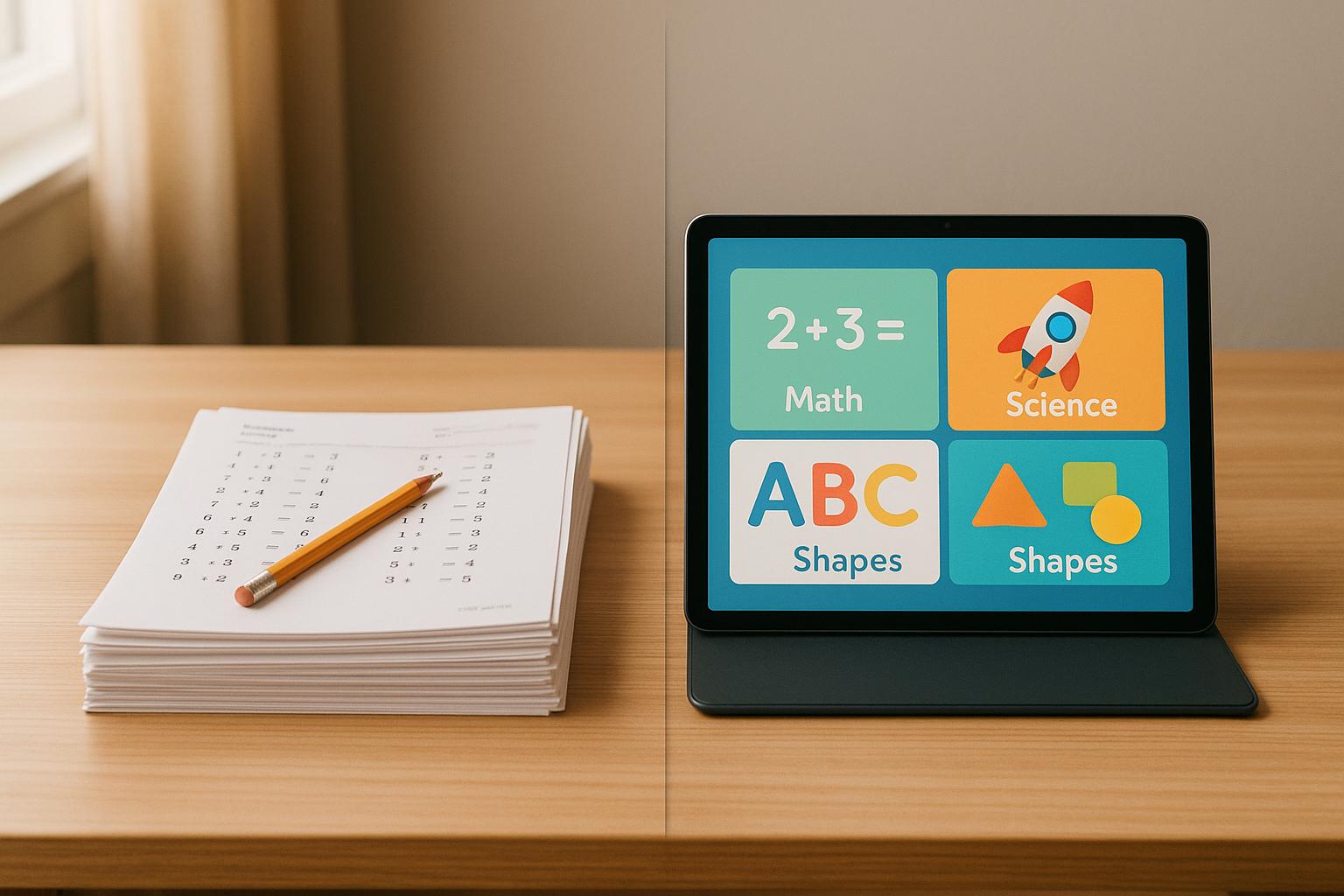
Online learning platforms are surpassing Kumon's worksheet-based approach by addressing modern families' needs for flexibility, engagement, and personalization. Here's why:
Schedule Flexibility: Online platforms allow 24/7 access, eliminating the rigid schedules of Kumon centers.
Personalized Learning: Online tools adjust to each student's pace and learning style, unlike Kumon's standardized worksheets.
Cost Efficiency: Online options often cost $10–$50 per month for multiple subjects, compared to Kumon's $100–$200 per subject.
Broader Subject Coverage: Online platforms offer diverse subjects, including test prep and advanced courses, whereas Kumon focuses on math and reading.
Interactive Tools: Features like gamification and instant feedback make online learning more engaging than repetitive worksheets.
Families today prioritize convenience and tailored solutions. While Kumon's model worked in the past, it struggles to meet the expectations of a fast-changing educational environment.
KUMON MATH REVIEW: IS IT WORTH YOUR MONEY?!
1. Kumon's 'Proven Method'
Kumon's approach is built around repetitive worksheet practice and a step-by-step progression through standardized problem sets. This self-paced system has remained virtually unchanged since its creation by Toru Kumon in 1950s Japan.
At its core, the method is anchored by four main principles: starting below grade level to build confidence, advancing in small increments, practicing daily, and achieving mastery before progressing. Students typically visit Kumon centers twice a week for 30-minute sessions, with additional homework assigned for the other days.
Challenges with Flexibility
One of the biggest hurdles for modern families is the rigid schedule. Kumon centers operate on fixed hours, usually after school or on weekends, leaving little room for flexibility. Parents often struggle to juggle transportation and manage time, especially since the twice-weekly attendance is mandatory, regardless of vacations, illnesses, or other family commitments.
Limited Personalization
Despite its claims of individualized pacing, Kumon offers limited personalization. Every student follows the same sequence of worksheets, regardless of their learning style or specific needs. Struggling students aren't provided with alternative explanations or methods, and the system doesn't cater to visual learners who thrive with diagrams or kinesthetic learners who benefit from hands-on activities. This "one-size-fits-all" approach can leave some students feeling unsupported.
Cost Concerns
The cost is another sticking point for families. Monthly fees range from $100 to $200 per subject, which can add up to $4,800 over two years for just one child. On top of that, there are additional fees and transportation costs, making it a significant financial commitment.
Narrow Subject Focus
Kumon's focus is limited to math and reading, which leaves gaps for families seeking help in other areas like science, social studies, test prep, or advanced coursework. High school students aiming for SATs or AP exams may find Kumon's curriculum too elementary and not aligned with their needs.
Instructor Model
The role of instructors at Kumon is quite different from traditional tutoring. Instead of providing detailed explanations, instructors mainly supervise and grade worksheets, leaving students to rely heavily on repetitive problem-solving to achieve mastery. While this works for some, it doesn't suit everyone.
Relevance in Modern Education
Kumon's traditional approach, which once fit well with simpler family schedules and fewer educational alternatives, now feels outdated to many parents. The repetitive worksheets may not prepare students for today's tech-driven, collaborative classrooms. Many families report that the initial enthusiasm fades after months of monotonous worksheets, often leading to resistance and homework battles at home.
This rigidity clashes with the more dynamic, student-centered learning environments that modern education demands. As a result, many parents are turning to online learning platforms, which promise more personalized and adaptive experiences tailored to individual needs.
2. Online Learning Platforms
Online learning platforms are reshaping outdated educational practices by offering solutions designed for today's families and students. These platforms bring flexibility, personalization, affordability, and a broader range of learning options to the table, making them an appealing alternative to traditional tutoring methods.
Unparalleled Flexibility
One of the standout features of online learning is its 24/7 accessibility. Students can log in whenever it suits their schedule - whether it's early morning before school, during a lunch break, or late at night after extracurricular activities. Gone are the days of rushing to physical tutoring centers or worrying about missing sessions due to vacations or illness.
Parents also reap the benefits of this flexibility. There's no more juggling carpools, waiting in parking lots, or rearranging work commitments. With online platforms, learning happens at home and on the student's timeline, eliminating the logistical headaches associated with traditional tutoring.
Personalized Learning Through Technology
Unlike the one-size-fits-all approach of programs like Kumon, online platforms leverage adaptive algorithms to tailor lessons in real time. If a student struggles with a concept, the system provides targeted practice, alternative explanations, and visual aids. Advanced learners, on the other hand, can move ahead without being held back.
These platforms also cater to different learning styles. Lessons often include interactive diagrams and animations for visual learners, step-by-step narrations for auditory learners, and virtual tools for kinesthetic learners. This multi-sensory approach ensures that every student can engage with the material in a way that works best for them.
Cost-Effective Options
When it comes to cost, online platforms often come out ahead. While programs like Kumon charge $100–$200 per month per subject, online platforms typically cost between $10 and $50 for unlimited access to multiple subjects. Over time, this can save families thousands of dollars.
Additionally, many platforms offer family plans, allowing multiple children to share a subscription at a reduced cost. This predictable pricing structure makes it easier for families to budget without unexpected expenses.
Wide Range of Subjects
Online platforms cover a broad spectrum of academic subjects, all in one place. A student can work on algebra in the morning, dive into biology in the afternoon, and tackle SAT prep in the evening - all without switching services. This all-in-one approach eliminates the need for multiple tutoring subscriptions.
These platforms also offer advanced coursework for students preparing for AP exams, SATs, or college-level subjects. With regularly updated content that aligns with current educational standards, students have access to resources that meet their academic needs. Unlike Kumon, which has a narrower focus, online platforms provide support across virtually all subjects.
Engaging and Interactive Learning
Modern online platforms make learning fun by incorporating gamification features like badges, achievement levels, and interactive challenges. These elements transform studying into a game, keeping students motivated and engaged.
Another key advantage is the immediate feedback students receive. Instead of waiting for the next session to review mistakes, they get corrections and explanations right away. This real-time feedback helps students learn faster and avoid reinforcing errors.
Progress Tracking Made Easy
Parents can monitor their child's progress through detailed analytics. These reports show which topics have been mastered, where struggles persist, and how much time is spent on each subject. Such insights are rarely available with traditional tutoring programs.
This data empowers families to make informed decisions about their child's education. For example, if a student excels in algebra but struggles with geometry, parents can adjust study priorities or seek additional help in specific areas.
Access to Professional Instruction
While online platforms emphasize self-paced learning, many also offer live tutoring sessions. Students can schedule one-on-one time with qualified instructors whenever they need extra guidance. This hybrid model combines the flexibility of online learning with the personalized support of traditional tutoring.
Since these platforms are not restricted to local staff, they often attract top-tier instructors from across the country. This ensures students receive high-quality instruction that surpasses the limitations of worksheet-based programs like Kumon.
Pros and Cons
Let’s take a closer look at how personalization and cost differ between Kumon's teaching method and online learning platforms.
Aspect | Kumon's Method | Online Learning Platforms |
|---|---|---|
Personalization | Based on a standardized curriculum that remains the same for every student | Focuses on interactive, adaptive learning tailored to each individual’s needs |
Cost | Fixed monthly fees per subject, plus one-time registration and materials fees | Offers various pricing options, including free resources, pay-per-lesson, and subscriptions |
These distinctions highlight the shift between Kumon’s structured, one-size-fits-all approach and the more flexible, individualized methods offered by online platforms. While Kumon sticks to a consistent curriculum and pricing model, online platforms cater to a broader range of needs, both in terms of learning styles and budget options.
For families, the choice boils down to priorities: Do you value the predictability and discipline of a set curriculum, or do you prefer the adaptability of a system that adjusts to your child’s pace and your financial preferences? Both options reflect the changing landscape of education, offering solutions that align with different goals and circumstances.
Conclusion
The changing landscape of education has revealed the shortcomings of conventional approaches like Kumon. As expectations evolve, these traditional methods often struggle to keep pace with the growing demand for more flexible and personalized learning solutions. Both parents and students now prioritize options that can seamlessly align with their unique needs and schedules.
Online platforms have emerged as a game-changer, allowing students to learn whenever it suits them. By eliminating rigid schedules and location constraints, these platforms address the logistical challenges that center-based models face. This level of flexibility is becoming increasingly important for families navigating busy, unpredictable routines.
One of the standout advantages of online learning is its ability to deliver personalized experiences. Unlike Kumon’s standardized curriculum, many online platforms tailor lessons in real time to match each student’s pace and learning style. This personalized approach resonates in today’s tech-driven world, where adaptability is not just a bonus - it’s a necessity.
The growing preference for these dynamic, student-centered platforms highlights a broader shift in educational priorities. The pressing question is whether traditional systems like Kumon can evolve quickly enough to remain relevant in an era that demands constant innovation and adaptability.
FAQs
How do online learning platforms offer more personalized experiences than Kumon's traditional method?
Online learning platforms use cutting-edge technology like data analytics and AI to personalize lessons for each student. These tools monitor progress, pinpoint challenges, and adjust content on the fly to align with the learner's pace and preferences.
This approach helps students build on their strengths while tackling areas where they need improvement. By moving away from rigid, standardized methods, these platforms focus on personal growth and make learning more engaging and effective.
How do online learning platforms offer better cost benefits compared to traditional Kumon centers?
Kumon charges between $100 and $200 per month, which can become a hefty expense over time. On the other hand, many online learning platforms provide pricing options that are easier on the wallet. These might include subscription plans, pay-as-you-go models, or even free resources, offering families more flexibility in managing their budgets.
Another advantage of online platforms is the absence of commuting costs, which not only saves money but also frees up valuable time. Plus, with features like personalized learning tools and access to a broad selection of subjects, these platforms often offer more for what you pay.
How do online learning platforms provide more flexibility for busy families?
Online learning platforms provide flexibility that helps families align education with their daily routines. Students can tackle lessons and assignments right from home, cutting out travel time and making the most of their day.
What’s more, many of these platforms let learners work at their own speed. This makes it easier to juggle schoolwork alongside extracurriculars, family obligations, or other priorities. It’s a setup that ensures education blends effortlessly into even the most packed schedules.
